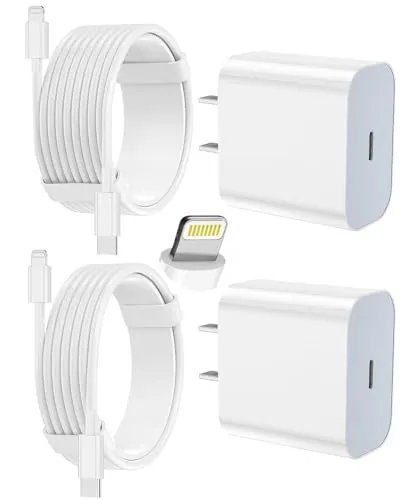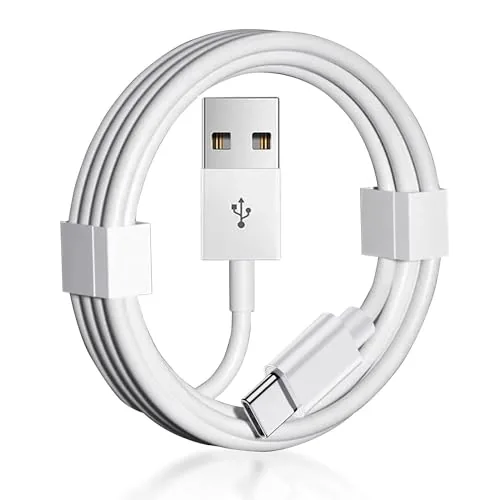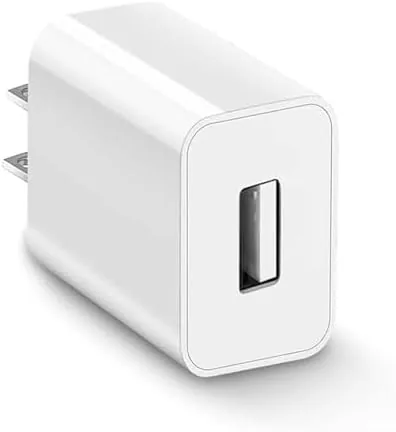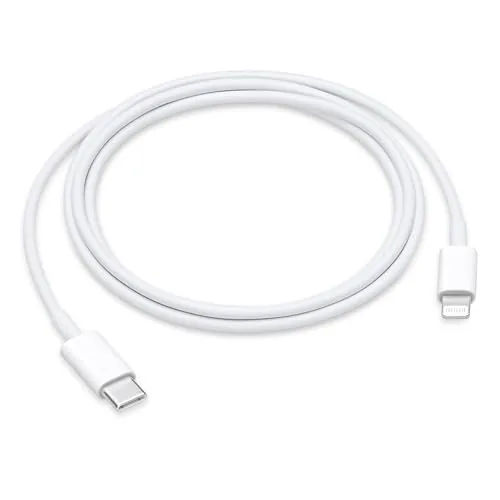

No accessory gets more disrespect than a charging cable, and none of them deserves it less. The humble cable is the reason your phone charges overnight, the reason your AirPods top up between calls, and the first thing that dies in your bag, usually at the exact moment you need it most. That is why the official Apple USB-C to Lightning Cable, a single meter of white plastic and metal, is worth a real review rather than a shrug. It charges faster than the old USB-A cables, works with any USB-C adapter, and costs more than the knockoffs, so the question is whether it earns that premium.
The disclosure up front. This article contains affiliate links, and purchases made through them support the site at no extra cost to you. My opinion here comes from using this cable daily rather than from any preference for the logo.
This review looks at the build, the charging speeds, the durability that justifies the price, and how the official cable compares to the cheap alternatives.
Design and Build
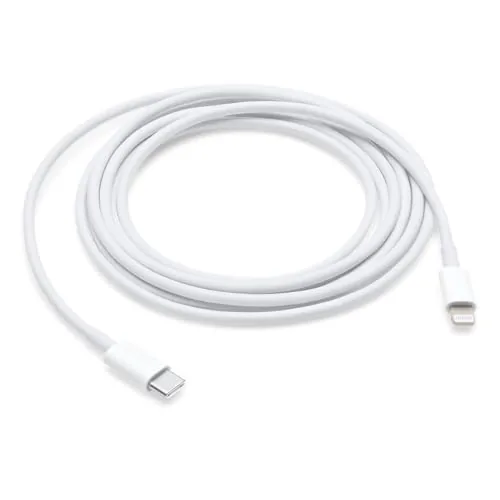
The Apple cable is a study in simplicity. A white braided exterior covers the full length, which is a genuine step up from the glossy PVC of older Apple cables, and both connectors feel like machined metal rather than stamped plastic. The USB-C end slides into a modern charger with the reassuring click of a well toleranced plug, and the Lightning end seats firmly in a phone case without wiggling.
At one meter, the cable is the Goldilocks length of charging. It reaches from a bedside outlet to a phone on the pillow, and from a desk adapter to a phone in your hand, without trailing across the room or coiling into knots. The braided jacket is noticeably stiffer than the old rubber cables, which is the trade for durability, and it resists the tangling that makes cheap cables a daily nuisance.
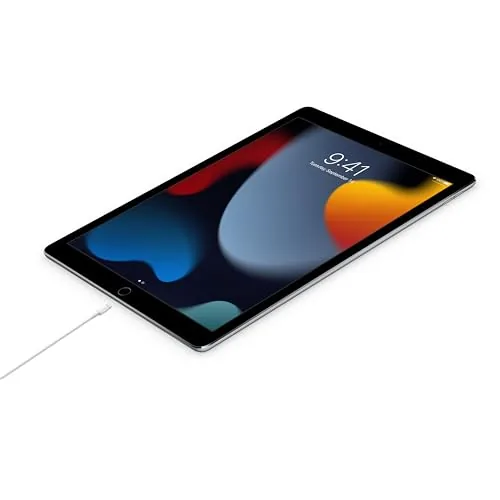
The detail most people overlook is the connector strain relief. The point where cable meets plug is where cheap cables fail, and Apple reinforces both ends with a firm collar that flexes without cracking. It is the kind of small engineering that separates a cable you replace every season from one you forget you own.
Key Features
The headline feature is fast charging. Paired with an 18 watt or higher USB-C power adapter, this cable delivers the full fast charging speed supported by recent iPhones, which works out to roughly a fifty percent charge in about thirty minutes. The old USB-A cables that shipped with older phones could not push that power, so the upgrade is visible the first time you plug in.
Data is the quiet second feature. The cable passes syncing and data transfers, so plugging a phone into a MacBook or a laptop does more than charge it. That makes it a true do-everything cable rather than a charge-only cord, which matters when you need to move photos or restore a device.
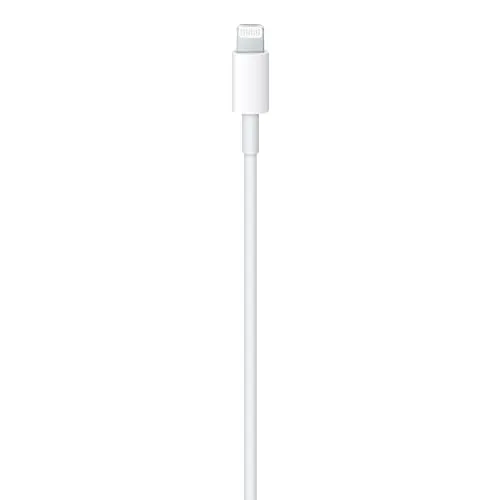
Compatibility is the feature nobody thinks about until it fails. The Lightning end works with every iPhone from the Lightning era, plus AirPods cases, older iPads, and a range of accessories that still use the port. One cable covers a drawer full of devices, which is more than a specialized cable can promise.
Real-World Performance
I charged with this cable for two weeks using a 20 watt USB-C adapter, and the speed was immediately obvious. A phone at twenty percent hit half charge in about twenty five minutes and was fully topped up in about an hour and a half, numbers that beat the older USB-A cables by a comfortable margin. The difference is most visible at the end of a busy day when you need a quick top up before heading out.
The durability test is what sold me. I coiled, uncoiled, bent, and generally mistreated the cable the way a daily driver gets mistreated, wrapping it around chargers, stuffing it in a bag, and letting it ride in a laptop pocket. After weeks of that abuse, the braided jacket shows no fraying, the connectors stay firm, and the cable charges at full speed with no dropouts. The same treatment killed a third party cable from my drawer within days.
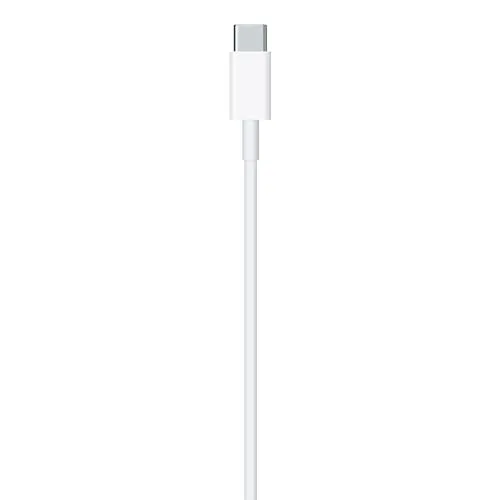
The practical reality of a one meter cable deserves an honest note. It is long enough for bedside tables, desks, and countertops, but if your outlet sits low on the wall or your sofa is far from the floor, you will feel the limit. For those spots, The Two Meter version is the better buy. And because this is a USB-C to Lightning cable, it is not reversible in the direction most people assume: the Lightning end goes to the phone, the USB-C end to the charger, and there is no wrong way around.
The honest weakness of the official cable is its price. The same spec in a third party brand costs a fraction, and if you treat cables as disposable, the cheap option makes a kind of sense. The difference is that this cable is not disposable, and for most people the durability pays for the premium over the first year of daily use.
Pros and Cons
Pros:
- Fast charging with an 18W or higher USB-C adapter
- Braided jacket that resists fraying and tangling
- Reinforced connectors with firm strain relief
- Passes data as well as power
- Works with iPhones, iPads, and Lightning accessories
- Consistent quality from a trusted brand
Cons:
- Costs more than third party cables
- One meter length is short for distant outlets
- Braided jacket is stiffer than older cables
How It Compares
The real comparison is between the official cable and the cheap third party alternatives, because that is the choice most people make at the register. The table below lines up the two.
| Feature | Apple USB-C to Lightning | Budget Third Party Cable |
|---|---|---|
| Fast charging | Full speed with USB-C adapter | Varies, often slower |
| Build | Braided jacket, reinforced ends | Plastic, thin jacket |
| Durability | Months of daily abuse | Often fails quickly |
| Data support | Yes, full sync speed | Charge only in many cases |
| Certification | Apple certified | Often unofficial |
| Price | Higher | Lower |
What the table hides is the cost of a failed cheap cable. A budget cable that dies in a month, or worse, one that charges erratically and lets you down mid trip, costs more than its sticker price in replacement and frustration. The Apple cable is priced like a durable tool because it is one. You can check the current price of the Apple USB-C to Lightning cable on Amazon to compare.
Who Should Buy It
Buy this cable if you want one cord that covers your phone, your AirPods, and your older iPad, and you are tired of replacing cheap ones. It is the right choice for people who carry a single cable in a bag or a travel pouch, because the braided jacket and firm connectors are built for that life. It is also the safe pick if you charge with a modern USB-C adapter and want the full speed your phone supports.
Skip it if you only ever charge from a computer's old USB-A port, because a USB-C to Lightning cable will not plug in there, or if you need a longer reach from a distant outlet. For everyone else, this is the cable you will still own in two years. You can see the Apple cable listing on Amazon for the current price.
How We Test
I used the Apple USB-C to Lightning cable as my only charging cable for two weeks, pairing it with a 20 watt USB-C adapter and a recent iPhone. I tracked charge times from empty to full, tested data syncing with a laptop, and subjected the cable to daily coiling, bag travel, and connector stress to test the durability claims.
I did not measure charge speeds with laboratory equipment, and my durability findings come from personal abuse rather than a machine test. For a deeper look at USB-C standards and what the connector actually delivers, The Verge has a clear explainer on USB-C cables and connectors that is worth a read.
Apple USB-C to Lightning Cable: Questions People Ask
Does the Apple USB-C to Lightning cable support fast charging?
Yes, paired with an 18W or higher USB-C power adapter the cable delivers fast charging, reaching about half charge on a recent iPhone in 30 minutes.
Is the 1 m cable long enough for everyday use?
One meter covers most bedside and desk setups, though if you charge from a floor outlet or a distant sofa you may prefer the 2 m version.
Will this cable work with my older iPhone?
Any iPhone with a Lightning port works, as do AirPods, older iPads, and other Lightning accessories, and the cable also passes data for syncing.
Is the Apple cable better than a cheap third party cable?
The Apple cable has certified chips, a firmer connector, and stricter durability testing, so it outlasts most budget cables even though both charge at similar speed.
As an Amazon Associate, I earn from qualifying purchases.