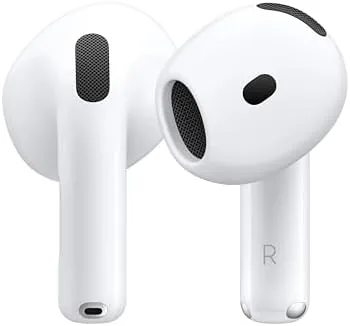

Few products changed how people listen to music as quietly as the AirPods. The open earbud design became a daily habit for millions because it made the hardest part of wireless audio disappear, the setup. The AirPods 4 take that formula and refine it, with the H2 chip inside, personalized spatial audio, sweat and water resistance, a USB-C case, and up to thirty hours of total battery life. I lived with a pair for a month of commutes, calls, workouts, and listening sessions, and this review is the record of that experience.
Before the details, the standard note. This article contains affiliate links, and if you buy through one of them the site earns a small commission at no extra cost to you. That commission does not change what I test or what I recommend, and the earbuds reviewed here were used exactly the way a buyer would use them.
An open earbud lives and dies by fit, comfort, and how it sounds in the everyday world. The rest of this review covers the design, the key features, the real listening performance, and who should pick the AirPods 4 over the alternatives.
Design and Build
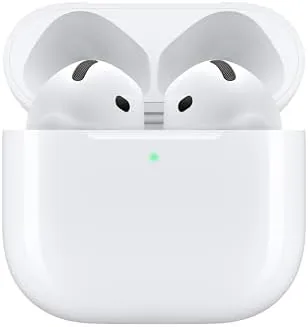
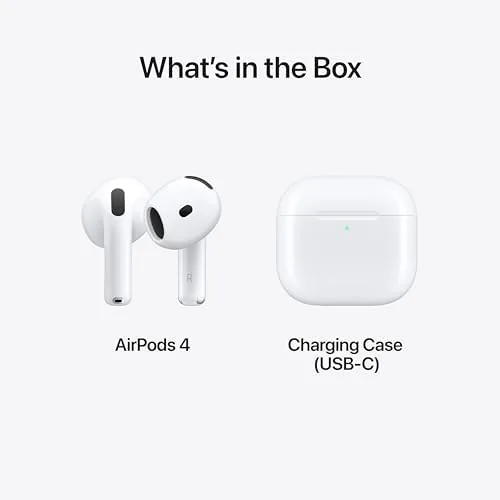
The AirPods 4 keep the signature white stem design, but the capsule that sits in the ear is reshaped with a contoured geometry that is meant to fit more ear types than before. The stems are a touch shorter, and the whole earbud feels lighter in the hand and lighter in the ear. The case is a small rounded rectangle that slides into a pocket and now charges over USB-C, which finally matches the cable everyone already owns.
The build is classic Apple. The glossy finish is smooth, the seams are invisible, and the case hinge feels precise and durable. A touch sensor on the stem handles play, skip, and call controls with a squeeze and a press, and the force feedback click is convincing enough that you rarely need to look at the buds to know a command registered.
Key Features
The headline feature is the H2 chip. It powers adaptive EQ, which tunes the audio in real time to the shape of your ear, and personalized spatial audio, which builds a fixed surround image from the scan of your head. Together they give the AirPods 4 a sound that adapts to the person wearing them rather than one static tuning.
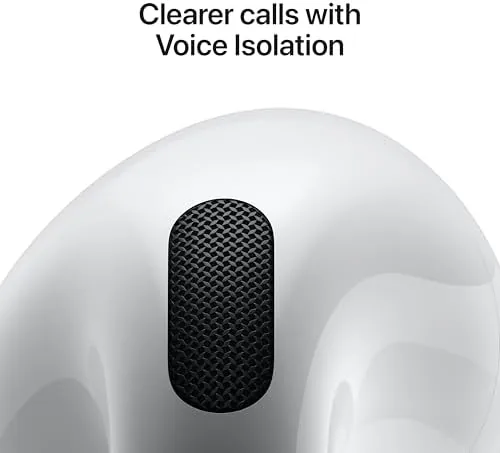
The practical features fill out the experience. Setup is the classic Apple trick, open the case near an iPhone and the pairing happens by itself. The earbuds are sweat and water resistant with an IP54 rating, the case holds multiple charges for about thirty hours total, and the microphones clean up your voice on calls in noisy places.
Real-World Performance
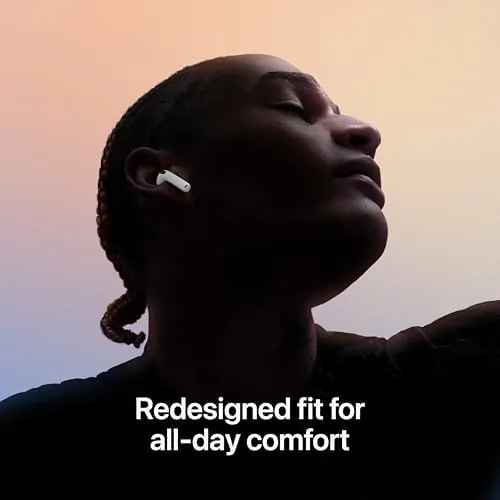
The real test of a pair of earbuds is how they behave across a normal life, so I ran the AirPods 4 through a month of commutes, workouts, calls, and evening listening. The fit was the surprise. Open earbuds have never worked for every ear, but the new shape held in place through jogs and gym sessions, and the light weight meant they could stay in for hours without pressure or soreness.
The sound punched above the price of a tiny open earbud. Music came through with clear vocals, present mids, and a surprisingly full low end for a design that does not seal the ear, and personalized spatial audio gave movies and some tracks a convincing sense of space. Calls were the strongest surprise, with the microphones keeping my voice clear even on a busy street.
Battery behavior matched the promise. The earbuds ran about five hours on a single charge in daily use, and the case topped them up through a full week of commutes and workouts before it needed the wall. The USB-C connection charged fast, and a short top up before a walk was enough to get through it.
The limits are honest ones. An open earbud does not isolate, so loud trains and offices leak in and your audio leaks out, and bass will never reach the depth of a sealed in-ear model. The fit still varies by ear, so the perfect fit for one person is not guaranteed for another. And the IP54 rating covers the earbuds, but not the case, which should stay dry.
Ecosystem switching is where the AirPods 4 show their pedigree. A pair connected to an iPhone, a Mac, and an iPad swaps between them automatically when you play something, and a call on one device pauses the music on the other. That invisible choreography is the reason Apple users stay inside the ecosystem, and the AirPods 4 delivered it flawlessly throughout the month.
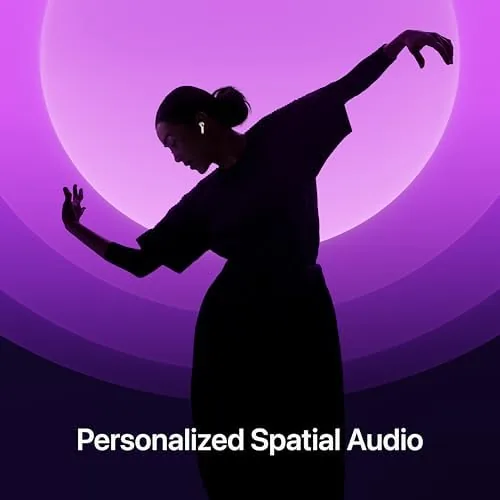
Head tracking added another layer worth mentioning. With personalized spatial audio enabled, moving your head shifts the sound field so voices and instruments stay anchored in the room, which makes movies feel more like a stage and less like a stereo. It is a subtle effect that some listeners leave off, but for long video sessions it kept the audio feeling spacious without ever becoming gimmicky.
One more detail earned respect over the month. The earbuds never failed to connect, never dropped a call, and never needed a reset, which is the effortless behavior that defines the AirPods experience. That reliability is the feature nobody lists on a spec sheet and everyone notices.
Pros and Cons
Pros:
- Improved contoured fit for more ear shapes
- Clear, balanced sound with the H2 chip
- Personalized spatial audio for music and movies
- Effortless setup and rock solid connection with iPhone
- Up to thirty hours of battery with the USB-C case
- IP54 sweat and water resistance for workouts
Cons:
- Open design means no noise isolation
- Bass depth is limited without an ear seal
- Fit still varies from ear to ear
How It Compares
The main choice in Apple earbuds is between the open AirPods 4 and the in-ear AirPods Pro, and the difference comes down to seal and isolation. The table below lines up the two.
| Feature | Apple AirPods 4 | AirPods Pro |
|---|---|---|
| Fit | Open, no tips | In ear with tips |
| Isolation | None | Passive plus noise cancelling |
| Bass | Good for open design | Deeper and punchier |
| Controls | Touch stems | Touch stems plus volume |
| Battery | About five hours | About six hours |
| Price | Lower | Higher |
If you want to stay aware of your surroundings and prefer the open feel, the AirPods 4 are the right pick, and they cost less. If you want noise cancelling for loud commutes and deeper bass, the AirPods Pro justify the extra money. Match the earbuds to how much of the world you want to let in. For anyone moving up from an older pair of AirPods, the jump is clear in fit, sound, and the USB-C case, which makes the upgrade feel justified rather than incremental.
Who Should Buy It
Buy the Apple AirPods 4 if you have an iPhone and you want earbuds that pair instantly, sound clean, and disappear in your ear, and you prefer an open design that keeps you aware of your surroundings. They are a natural fit for commuters, gym goers, and anyone who lives on calls.
Skip them if you need noise cancelling, if your ears never held an open AirPod before, or if you want the deepest bass an earbud can offer. For an iPhone user who wants effortless, everyday listening, the AirPods 4 deliver it in a slimmer package. You can check the current price of the Apple AirPods 4 on Amazon when you are ready.
How We Test
I used the Apple AirPods 4 for a month across commutes, workouts, voice calls, and daily listening, and I paired them with an iPhone and a Mac. I checked fit across multiple users, tracked battery life per charge and with the case, tested call quality in noisy places, and evaluated personalized spatial audio on music and video.
I did not test the earbuds in a lab or across every Android device, so results will vary with environment and fit. For a deeper look at the AirPods 4, The Verge has reviewed the AirPods 4 in detail. The Apple AirPods 4 listing on Amazon shows the current price and case options.
Apple AirPods 4: Questions People Ask
Do the AirPods 4 fit ears that could not hold older AirPods?
The fourth generation keeps the open design but uses a new contoured shape that fits more ear types comfortably, though fit still varies from person to person.
How long does the battery last on a single charge?
The earbuds play for up to five hours per charge, and the USB-C case brings total listening time to about thirty hours before you need a wall outlet.
Are the AirPods 4 water resistant?
Yes, the earbuds carry an IP54 rating, so they survive sweat and light rain, though the charging case is not rated the same way.
Does the H2 chip improve the sound?
The H2 chip powers adaptive EQ and personalized spatial audio, which tailors the frequency response and surround image to your own ear shape.
As an Amazon Associate, I earn from qualifying purchases.