 Cup Food Processor on a kitchen counter with the bowl in place" width="1200" height="800" loading="lazy" style="height:auto">
Food processors sit at a strange point in the kitchen appliance market. Premium machines cost as much as a small tablet, while bargain models feel like toys that stall on a single carrot. The Amazon Basics food processor aims for the sensible middle, offering a 10 cup bowl, a 500 watt motor, two speeds, and a pulse function at a price that does not require a budget meeting. I put one through six weeks of meal prep, holiday sides, dough, and dips to find out whether this budget machine can actually do the work of a food processor or just pretend to.
Before the details, the standard disclosure. This article contains affiliate links, and if you buy through one of them the site earns a small commission at no extra cost to you. That commission never changes what I test or recommend.
Design and Build
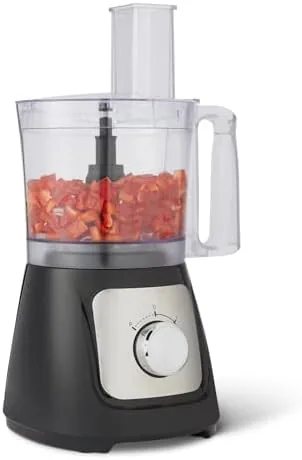
The Amazon Basics food processor is honest about its mission from the moment you unpack it. The black plastic body is functional rather than flashy, with a compact footprint that does not swallow the countertop. The 10 cup bowl locks onto the base with a firm twist, and the lid seals with a reassuring click that prevents leaks when liquids get involved.
The control panel is refreshingly simple. A high speed button, a low speed button, and a pulse button sit in a row, and that is the whole interface. There is no digital display, no timer, no menu to scroll through, just straightforward buttons that do what they say. For a tool meant to be used with floury hands and wet ingredients, this simplicity is a genuine strength.
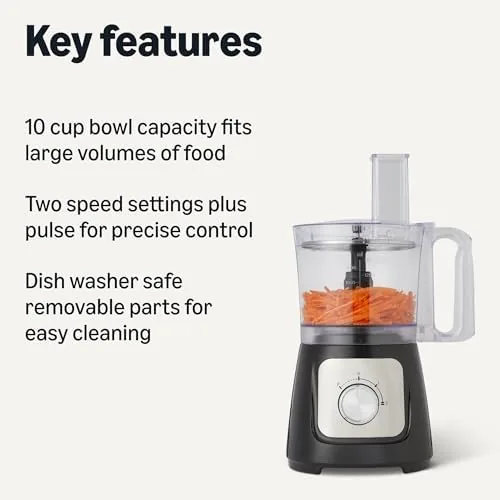
The stainless steel S blade and the reversible shredding and slicing disc are both solid, and the feed tube on the lid is large enough to accept whole potatoes and quartered onions without precutting everything. The base has grippy rubber feet that hold the machine steady during heavy loads, and a short power cord that keeps the appliance neat on a crowded counter.
Key Features
The 500 watt motor is the heart of the machine. It does not have the raw grunt of a 750 or 900 watt premium motor, but it is tuned for the way most people actually cook. Vegetables, nuts, cheese, and dough all fall within its comfortable range, and the two speeds give useful control between gentle mixing and aggressive chopping.
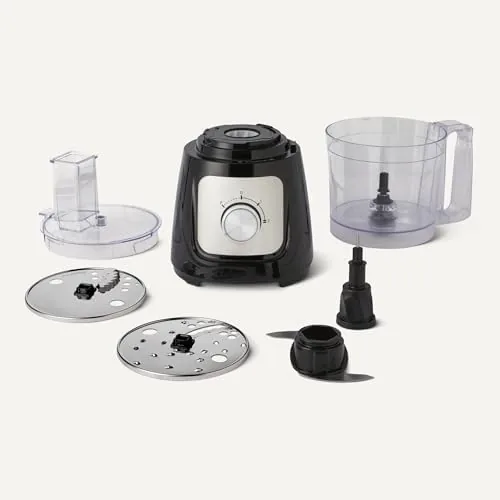
The pulse function deserves special mention because it is the difference between chopped and obliterated. A steady thumb on the pulse button gives the kind of controlled, chunky results that salsa and pico de gallo demand, and the short bursts keep the blade from turning everything to mush. This is the feature home cooks reach for most, and it works well here.
The 10 cup bowl is genuinely useful rather than marketing math. It processes a whole head of cabbage into coleslaw, a double batch of pie dough, or enough hummus for a party. Because the bowl, lid, blades, and discs all separate and go in the dishwasher, cleanup is a non issue, which is the hidden cost of so many food processors that fall apart in the sink. To check the current bundle and price, the Amazon listing for this 10 cup food processor is the place to start.
Real-World Performance
I started with the basics: onion, carrot, and celery for a mirepoix. The low speed handled the onion with clean cuts and no pulverizing, the carrot came out in consistent dice with a few pulses, and the celery shredded without turning stringy. The 10 cup bowl gave everything room to tumble, which is what produces even results instead of a layer of fine mush at the bottom.
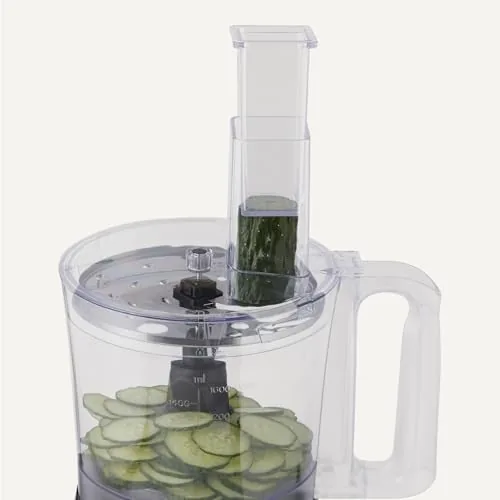
The shredding and slicing disc was the star for volume work. A block of cheddar shredded into even ribbons in seconds, potatoes sliced thin enough for a proper scalloped dish, and a head of cabbage turned into slaw without anyone crying over a mandoline. The feed tube handled whole tomatoes and onions comfortably, though very large items still needed a quick halving.
Dough was the test that often separates budget machines from premium ones. A double batch of pie dough came together quickly, with the motor keeping a steady rhythm through the butter and flour without overheating or slowing. The pulse function proved ideal for cutting butter into flour, and the dough came out tender and flaky in the finished crust. I also ran a batch of pizza dough, which the machine kneaded without complaint, a pleasant surprise at this price.
There are limitations. The motor is loud at high speed, comparable to a blender, and it struggled briefly on a very firm block of frozen butter. Hummus came out smooth enough with a few pulses and a drizzle of oil, but it needed the tamper and a pause to scrape the sides, since the 10 cup bowl is wide and blades do not always reach the walls. These are the expected tradeoffs of a budget processor, not deal breakers.
Pros and Cons
Pros:
- 10 cup bowl handles large batches for family cooking
- 500 watt motor manages vegetables, cheese, nuts, and dough
- Pulse function gives precise control for chunky results
- Bowl, lid, blades, and discs are dishwasher safe
- Simple two speed controls with no confusing menu
- Reversible slicing and shredding disc is genuinely useful
Cons:
- Motor is loud and lacks the torque of premium models
- Firm or frozen ingredients can slow the blade
- Wide bowl needs scraping for smooth purees
- No storage case for blades and discs
How It Compares
To place this processor, I compared it against a bargain mini chopper and a premium 12 cup food processor to see what the price difference actually buys.
| Feature | Amazon Basics 10 Cup | Mini Chopper | Premium 12 Cup |
|---|---|---|---|
| Bowl capacity | 10 cups | 1.5 to 3 cups | 12 cups |
| Motor power | 500 watts | 200 to 300 watts | 750 to 900 watts |
| Slicing and shredding | Yes, reversible disc | No | Yes, multiple discs |
| Dough capability | Yes, light dough | No | Yes, heavier dough |
| Dishwasher safe parts | Yes | Yes | Yes |
| Price | Budget | Very low | Premium |
Against a mini chopper, the Amazon Basics model wins decisively on capacity and the slicing and shredding disc, which the small machines do not offer at all. Against a premium 12 cup processor, it loses on motor torque, attachment variety, and noise, but it delivers most of the day to day capability for a fraction of the price. For the home cook who wants real processing power without the premium price tag, the Amazon Basics machine is the smarter buy.
Who Should Buy It
This food processor is for home cooks who want to speed up prep without dedicating a cabinet and a budget to a flagship machine. If you grate cheese, slice vegetables, make dips and hummus, and mix dough a few times a month, this processor covers all of it with minimal fuss.
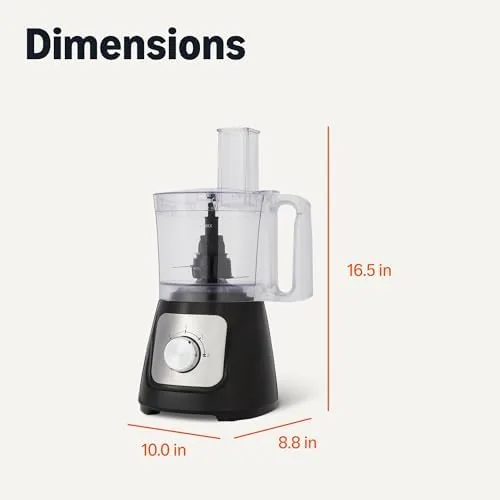
It is also a sensible first food processor for new cooks, students, and small kitchens, since the 10 cup bowl handles real recipes while the compact base stores easily. Skip it if you process dough daily at high volume, want a full attachment system, or need whisper quiet operation, because those demands point toward a premium model. You can check the current price of the Amazon Basics 10 cup food processor when you are ready to chop.
How We Test
I tested this processor over six weeks with a rotating menu of prep tasks: daily mirepoix and chopped vegetables, shredded cheese and coleslaw for family dinners, pie dough and pizza dough, hummus, pesto, and a full holiday side dish spread. I ran every task at both speeds and used the pulse function throughout to gauge control.
I timed chopping and shredding jobs, measured evenness of dice, and put the whole set through the dishwasher after each session to confirm the cleanup promise. I did not test it on frozen meat or hard bones, which no standard food processor should process. For independent context on what to look for in a food processor, Wirecutter's guide to the best food processors explains the features that matter most.
Questions People Ask About the Amazon Basics Food Processor
How big is the bowl on the Amazon Basics food processor?
The bowl holds 10 cups of processed food, which is enough for large batches of dough, dips, coleslaw, and vegetable prep for a family sized meal.
Is the Amazon Basics food processor dishwasher safe?
Yes. The bowl, lid, blades, and discs are dishwasher safe, so cleanup after a big prep session is quick and simple.
What can the food processor do besides chopping?
Beyond chopping and pureeing, it slices and shreds with the reversible disc, mixes dough, and blends dips and sauces using the pulse and two speed motor.
How loud is the 500 watt motor while running?
The motor is audible at high speed, similar to a blender, but the feed tube lid and stable base keep vibration and rattling to a minimum.
As an Amazon Associate, I earn from qualifying purchases.